Tensions in Iran exacerbate the plight of minorities
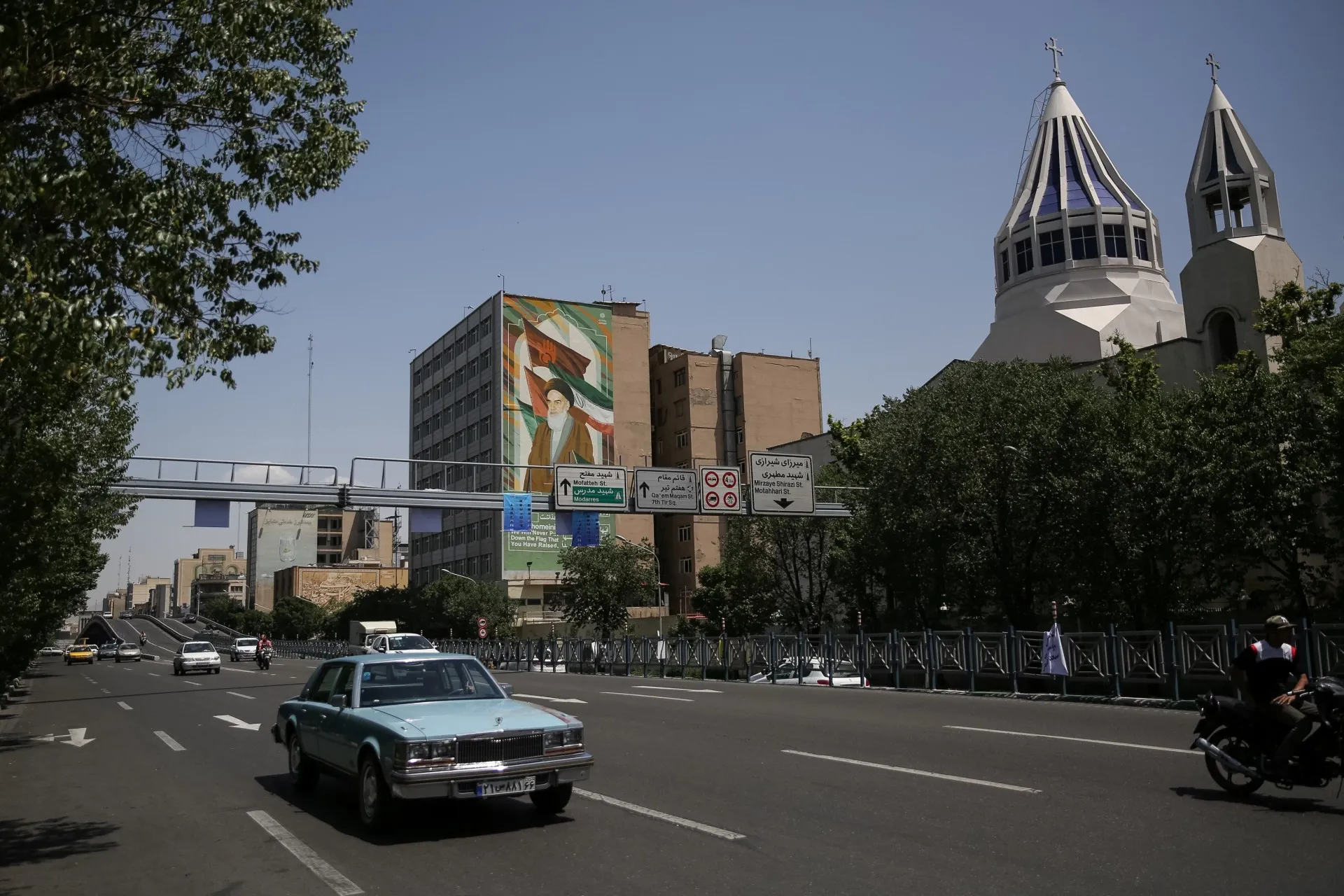
By: Dalshad Hussein/ Alhurra
The rate of violations against Christians, Jews, and Baha'is in Iran has increased significantly since the June 2025 war.
Iranian authorities are exploiting the tense security situation in the country to tighten their grip on religious minorities through arrests, confiscation of property and funds, dismissal from work, and seizure of places of worship under the pretext of “spying for Israel and collaborating with America,” according to activists and human rights organizations who spoke to Alhurra. Last month, authorities confiscated the St. Peter Evangelical Church compound in Tehran and evicted 27 members of the country’s recognized Armenian and Assyrian Christian minority who were residing there.
After numerous attempts through intermediaries and Christian activists living outside Iran, Alhurra was able to contact one of the victims of the eviction from the compound to recount the details of what happened. He used a pseudonym for fear of security persecution. Arsen, a Christian man in his fifties, said that a force from the Iranian Revolutionary Guard’s intelligence service raided the church and its residential compound, forcing him and others to sign a statement that they had left the compound of their own free will, before throwing their belongings out of the church.
He added that the Revolutionary Guard's intelligence services continue to surround the church compound to prevent its residents from returning, and have even prohibited clergy from holding prayers or any religious ceremonies there.
In July, the United Nations condemned the confiscation of the St. Peter Evangelical Church compound in Tehran and the eviction of its residents, considering it “a continuation of a long series of actions targeting the Christian community in Iran, particularly Persian-speaking Christians.” According to the UN, Iranian authorities closed the Assyrian Presbyterian Church in Tabriz in 2019 and demolished a Presbyterian church in Mashhad in June 2016, after it had been forced to close decades earlier. Iran once had around 50 Protestant churches, most of which offered services in Persian.
Today, almost none remain, as they have either been closed or forced to cease holding services in Persian. The last three Anglican churches in Tehran, Isfahan, and Shiraz that were permitted to hold services in Persian have also been prevented from reopening since the COVID-19 pandemic.
Christians are not the only ones facing repression from the Iranian authorities. According to activists and Iranian citizens who spoke to Alhurra from inside Iran, several Jews in Tehran, Isfahan, and Shiraz have recently been arrested in raids and crackdowns carried out by the intelligence arm of the Iranian Revolutionary Guard Corps, which Washington designates as a terrorist organization.
Activists indicated that a number of detainees were released in exchange for large sums of money, or that their families were forced to relinquish real estate and property to the regime in exchange for their release. Iran has a Shiite majority and numerous religious and ethnic minorities, most notably Sunnis, Armenian and Assyrian Christians, Jews, Zoroastrians, Mandaeans, Baha'is, and Yarsanis. These groups are geographically distributed across Kurdish, Baluchi, Turkmen, and Arab regions, as well as major cities such as Tehran, Isfahan, and Yazd.
Hamid Bahrami, head of the Canadian-based Iranian Kurdish human rights organization HANA, says that Iranian authorities have increased their pressure on religious minorities since the 12-day war between Israel and Iran in June 2025. Following the war, Iranian authorities leveled new accusations against Baha’is of ties to Israel, Christians were persecuted, and Jewish citizens were summoned and interrogated about their connections to relatives in Israel. A number of Sunni Muslim clerics also faced security pressures.
Hana’s statistics indicate that approximately 254 Christians were arrested in Iran last year because of their religious beliefs or activities, while the number of Christians arrested in the first few months of this year has reached approximately 79.
The organization stated that family ties have also become a basis for suspicion by authorities in Tehran. Dozens of Jews were summoned for questioning after June 2025 because of their contact with relatives in Israel and were ordered to curtail these contacts. As for the Baha'i minority, the number of those arrested by Iranian authorities in recent months has reached approximately 57, according to statistics from the human rights organization. The organization, HANA, accused Iranian authorities of mistreating detainees through beatings, electric shocks, threats to arrest and kill their relatives, and coercion to extract forced confessions. The abuses have even extended to sham executions.
Writer and political analyst specializing in Iranian and regional affairs, Mohammad Khanji, says that the Iranian regime links its internal crises to minorities, accusing them of inciting separatism, having ties to foreign powers, or threatening national security,
in order to justify repression. In its annual report on the state of human rights worldwide, published last April, Amnesty International revealed that religious minorities in Iran have been subjected to widespread violations.
Thousands of people have been arbitrarily arrested, interrogated, harassed, and subjected to unfair prosecution for exercising their human rights.
According to Amnesty International, Iranian authorities subjected dozens of Jews to arbitrary summonses and interrogations, charged them with espionage, labeled Christians as “Mossad mercenaries,” broadcast forced “confessions” of detainees, and raided churches and homes.